Brightly field note
50 Practical Money-Saving Tips for Tight Budgets
When money is tight, “just cut expenses” isn’t helpful advice. You need specific moves you can actually do—without turning your life into a miserable no-fun zone.
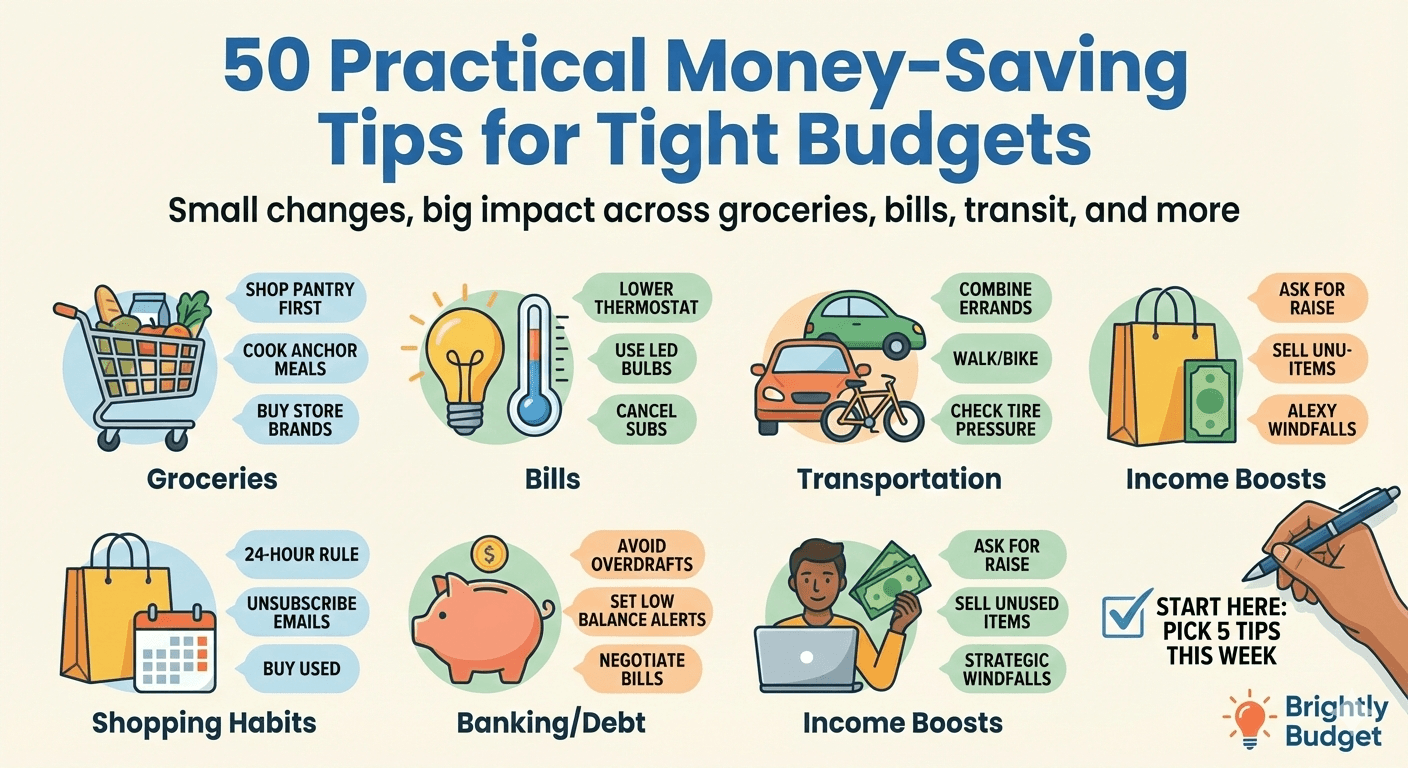
Here are 50 practical tips you can mix and match. Pick 5 to start this week.
Groceries & food (1–12)
- Plan 3–5 “anchor meals” for the week (repeat-friendly, cheap, filling).
- Shop your pantry first: build meals around what you already have.
- Buy store brands for basics (rice, oats, canned goods, frozen veg).
- Choose cheaper proteins (eggs, beans, lentils, chicken thighs).
- Keep one “emergency meal” stocked (frozen pizza, canned chili, ramen + eggs).
- Use unit price (cost per ounce/gram) instead of sticker price.
- Shop once per week, not “a little every day.”
- Don’t shop hungry (seriously—it works).
- Replace 1–2 takeout meals with “lazy dinners” (sandwiches, soup, breakfast-for-dinner).
- Freeze leftovers in single portions for future busy nights.
- Make water your default drink at home.
- Pack lunch 2–3 days a week (start small).
Bills & utilities (13–22)
- Cancel subscriptions you forgot existed.
- Set a “subscription swap” rule: only one streaming service at a time.
- Call your internet provider once per year and ask for a promo.
- Lower your thermostat 1–2 degrees (winter) / raise it slightly (summer).
- Switch to LED bulbs as old bulbs burn out.
- Wash clothes cold + air dry when possible.
- Avoid late fees with autopay (even minimum autopay helps).
- Set phone reminders for annual bills (insurance, memberships).
- Review insurance coverage yearly (shop around if appropriate).
- Use a library for books, audiobooks, and sometimes streaming.
Transportation (23–29)
- Combine errands into one trip (less gas, less impulse spending).
- Keep tires properly inflated (fuel efficiency).
- Use public transit/carpool when it’s realistic.
- Walk/bike short trips when possible (bonus: free exercise).
- Do basic maintenance on schedule (cheap now beats expensive later).
- Keep a small “car sinking fund” for repairs.
- Use fuel rewards/discount programs if you already shop there.
Shopping habits (30–40)
- Use the 24-hour rule for non-essentials.
- Make a “wishlist” note and revisit it weekly (most wants fade).
- Remove saved cards from shopping sites (add friction).
- Unsubscribe from retail emails (less temptation).
- Turn off push notifications from shopping apps.
- Buy used for kids’ clothes, furniture, and home goods.
- Set a monthly “fun money” limit so you can spend guilt-free—inside a boundary.
- Create a waiting period for big purchases (7–30 days).
- Price check across 2–3 stores before buying.
- Do a one-week “no-spend challenge” once per month.
- Sell unused items (and use the money for a goal, not random spending).
Banking, debt, and fees (41–46)
- Avoid overdrafts: keep a small buffer in checking (even $50 helps).
- If you carry credit card debt, stop charging new non-essentials while paying it down.
- Set alerts for low balances and large transactions.
- Pay bills right after payday to avoid “accidental spending.”
- Negotiate medical bills if you have them (ask about discounts/payment plans).
- If you’re paying fees on a bank account, consider switching (fees add up).
Income boosts (47–50)
- Ask for a raise with a concrete case (results, market range, responsibilities).
- Pick one realistic side income option (short burst > burnout hustle).
- Sell a service you already know (tutoring, writing, design, repairs).
- Use windfalls strategically: split into debt + emergency fund + one small treat.
Start here (simple 7-day plan)
Pick:
- 2 grocery tips
- 2 subscription/bills tips
- 1 habit tip
That’s it. Small wins build momentum.
Disclosure: This post is for educational purposes and isn’t financial advice.