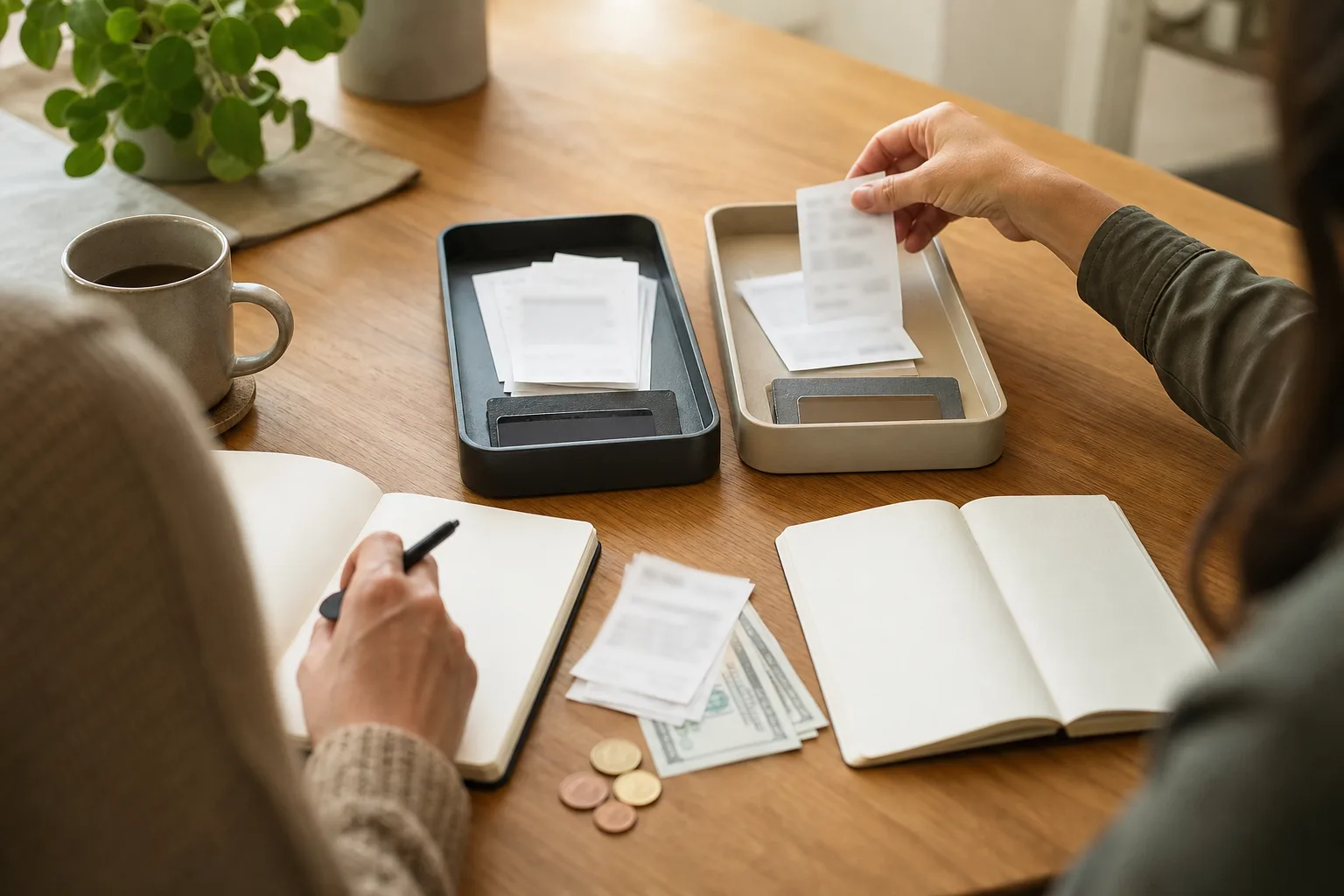
Having enough money overall but still paying bills from the wrong account is frustrating. It can trigger rushed transfers, declined payments, overdraft fees, and the lingering sense that your money is harder to manage than it should be.
This usually is not a spending problem. It is an account-organization problem: the money may exist, but it is not in the account your biller is set up to use when payment is due.
The good news is that a multi-account setup does not have to require moving money every few days. You need clear jobs for each account, a reliable way to fund bill money, and a short routine to make sure automatic payments still match the plan.
Why Bills Keep Coming From the Wrong Account
Multiple accounts can be useful. You might have an older checking account, a joint household account, a high-yield savings account, an account for freelance income, or a separate account for everyday spending. Problems begin when those accounts exist without a clear system.
Here are some of the most common reasons mix-ups happen.
Your Accounts Do Not Have Specific Jobs
If every account simply holds “money I can use,” it is easy to make payment decisions in the moment. You may pay a utility bill from whichever account has the largest balance, then forget that the same account also needs to cover rent, insurance, or a scheduled loan payment.
An account can hold money without having a purpose. That ambiguity creates last-minute decisions.
The Payment Source Was Chosen Once and Never Reviewed
Autopay is convenient, but it can preserve an old setup long after your finances have changed. Maybe you switched jobs, opened a shared account, moved a bill to a different due date, or started using a new card. The biller may still be pulling from the checking account you used years ago.
You may not notice until a payment processes at an inconvenient time.
Your Income and Bill Timing Do Not Line Up
Even with a good budget, timing matters. A bill due early in the month can hit before a later paycheck arrives. This is especially common when income is variable, paid on different schedules, or split between more than one source.
In this situation, the question is not whether you earn enough across the month. It is whether the right account has enough money on the exact day the bill is withdrawn.
Savings and Spending Money Are Too Easy to Confuse
Keeping savings separate can protect an important goal. But if savings also becomes the informal backup for everyday bills, it can turn into a revolving door: money goes in, bills come out unexpectedly, and transfers happen whenever checking looks low.
That makes it harder to tell how much savings is truly available for its intended purpose.
You Are Tracking Balances Instead of Commitments
A bank balance tells you how much is in an account right now. It does not tell you how much of that money is already spoken for.
For example, a checking account might show $1,200, but $900 of it may be needed for rent and insurance later that week. If you see only the total balance, it can seem safe to use the account for something else. Then an automatic payment arrives and creates a scramble.
Start With a Simple Account Map
Before changing autopay settings or moving money, write down every account you actively use. Include checking, savings, joint accounts, and any account that receives income or pays recurring expenses.
For each account, answer three questions:
- What money goes into this account?
- What expenses are allowed to come out of it?
- What minimum amount needs to stay there?
Keep the answers short and specific. A clear account map might look like this:
- Bills checking: receives the portion of income needed for fixed and recurring bills; pays rent, utilities, insurance, subscriptions, and debt payments.
- Spending checking: receives a set amount for groceries, fuel, dining out, and personal purchases.
- Savings: holds emergency savings and specific savings goals; does not pay routine bills.
- Income holding account: receives irregular income temporarily; money is assigned to bills, spending, and savings on a regular schedule.
You do not need this exact structure. One checking account and one savings account may be enough. The important part is that every account has a job that is easy to remember.
If you cannot explain an account’s job in one sentence, consider whether it provides useful separation or simply adds complexity.
Choose One Home for Bills
For most people, the simplest way to stop paying bills from the wrong account is to choose a single bill-paying account.
This is usually a checking account used for recurring obligations, not daily swiping. Once you choose it, update the payment method for every bill paid directly from a bank account. If you pay some bills by credit card, decide which checking account will pay that card’s statement, too.
Your bill-paying account can cover:
- Housing payments
- Utilities
- Insurance premiums
- Phone and internet service
- Child care or tuition payments
- Loan payments
- Subscription services
- Credit card payments, if that is part of your plan
The goal is not to force every dollar through one account. It is to avoid wondering where each essential payment will come from.
A bill-paying account works best when it is a little boring. Avoid using it for coffee runs, online shopping, or occasional cash withdrawals. The fewer surprise transactions it has, the easier its balance is to trust.
Build a Bill List With Timing and Payment Sources
Next, list every recurring bill. Do not rely on memory or a stack of notifications. Include the amount, due date, frequency, and current payment source.
A useful list includes:
- Bill name
- Typical amount
- Due date or withdrawal date
- Monthly, quarterly, or annual frequency
- Whether the amount changes
- Payment method
- Account or card currently used
This list is where hidden mistakes become visible. You may find that most bills come from your bills checking account, while one subscription still pulls from savings and an insurance payment is linked to an old checking account.
For bills with changing amounts, such as utilities, plan using a cautious estimate based on recent bills. Review that estimate periodically and leave room in the bill account for normal variation.
Also watch for nonmonthly expenses. Annual memberships, quarterly insurance payments, and periodic medical costs can create confusion because they do not appear in a typical monthly routine. You can prepare by setting aside a small portion of the expected cost over time in the account designated for that expense.
Fund Bill Money Before Bills Are Due
Once you know the total that needs to flow through your bills account, decide how it will get there.
If you are paid regularly, you may be able to direct part of each paycheck to the bill-paying account. This can happen through direct deposit splitting, if your employer offers it, or through a planned transfer shortly after payday.
If you are paid irregularly, use a different rhythm: whenever income arrives, assign part of it to upcoming bills before treating the remainder as spending money. A separate income holding account can help because it creates a pause between getting paid and spending.
The key is to fund bills based on upcoming obligations, not on whichever account looks low today.
Some people prefer to keep a cushion in the bills account: an amount left beyond the bills expected before the next funding date. A cushion can make timing less stressful, but choose an amount that fits your own cash flow. It is not a substitute for tracking scheduled payments.
Separate Bill Money From Spending Money
A dedicated spending account or card can make the system easier to maintain. When routine purchases come from a different place than automatic bills, you are less likely to accidentally spend money already assigned to essentials.
Set a regular transfer to spending only if that fits your overall plan. More often, both accounts are funded from income, with the bills account receiving its required amount first.
This distinction also changes how you read balances:
- The bills account balance answers: “Can my planned obligations clear?”
- The spending account balance answers: “What is available for flexible purchases?”
- The savings balance answers: “How much is reserved for future needs or goals?”
Those are different questions. One combined balance cannot answer all of them well.
Review Autopay Settings One Biller at a Time
Changing everything in one sitting can create new mistakes. Work through your bill list one biller at a time and confirm the account or card on file.
As you review, check these details:
- Is the listed bank account still open and active?
- Is the account number correct?
- Is the withdrawal date different from the stated due date?
- Is the payment set to the full balance, a fixed amount, or a minimum payment?
- Does the biller send a notice before taking payment?
After changing a payment source, note the date and watch the next payment closely. Keep the old account funded only as needed until you are sure no pending payments remain attached to it.
Use a Short Weekly Check-In, Not Constant Transfers
You do not need to monitor every account all day. A brief weekly review is usually more useful than reacting every time a balance changes.
During your check-in, look at the next one or two weeks and ask:
- Which bills are scheduled to leave the bills account?
- Is the money already there and assigned to those bills?
- Is any payment still linked to the wrong account?
- Did any irregular expense show up that needs a plan?
A budgeting tool, calendar, or simple notes list can help you see scheduled expenses in one place. Brightly Budget can also be a practical place to track account balances and planned spending without relying on memory alone.
What to Do if a Bill Comes Out of the Wrong Account Anyway
Even a solid system needs occasional cleanup. If a bill is pulled from the wrong account, do not treat it as proof that the whole plan failed.
First, check whether the intended bill account can cover the amount without disrupting another payment. If a transfer is needed, make it promptly and note why it happened. Then fix the underlying cause: update the biller, adjust the funding schedule, or clarify the account’s role.
If a payment could cause an overdraft or missed payment, contact the bank or biller promptly to understand your options. Policies vary, so it is better to ask than assume.
A Clearer System Means Fewer Money Decisions
Paying bills from the wrong account is often a sign that your money lacks clear lanes, not that you are irresponsible or bad at budgeting. Give each account a defined purpose, direct recurring bills to one home, fund that account before withdrawal dates, and review your setup regularly.
You may still make transfers sometimes. But they should support a plan, not rescue one at the last minute.
This is general information, not personalized financial advice.